
Why Technology Alone Cannot Close Kenya’s Diagnostic Gap
Lessons from KACP 2025 on innovation, workforce shortages, and the limits of digital solutions.
By Dr. Job Mwale Magare
Pathologists and diagnostic players across the country gathered for the annual Kenyan Association of Clinical Pathologists Conference in Shanzu in October 2025.
As a practising pathologist who is passionate about ensuring early and accurate diagnosis in remote and underserved communities, this platform provided me with a chance to present the OpenFlexure Project –a digital pathology solution I had been working on in collaboration with a team from Meru University and The Pathology Network.
The technology, which consists of a low-cost 3D-printed microscope, a cloud platform, and an integrated AI model, was developed to address the critical shortage of pathologists in Kenya (3.19 per 1 million people vs 6.4 per 100,000 people in developed countries) and improve access to timely and accurate cancer diagnostics across. It had been deployed in remote settings where it demonstrated power as a triage tool for tissue classification.
From the moment I stepped into the room, the spirit of innovation was palpable. There were a lot of thoughtful innovators deploying technology intelligently in diagnostics.
I found Dr Joshua Kibera’s presentation on practical considerations for the application of AI in African anatomical pathology workflows was highly relevant to our context. Also, the updates on how new diagnostic modalities were being employed in our context were enlightening. The rapid-fire abstract session by residents was very insightful. Prof. Shahin and Dr Njenga garnered considerable attention with discussions on HER-2 scoring in breast cancer, while Dr Allan Njau provided a most memorable discussion on biomarker testing in Kenya. Dr Kanyua also captured our imaginations with her insights on the use of AI and digital pathology in clinical microbiology. I could see the future.
Still, I couldn’t get a lingering question out of my mind:
Could technology alone close Kenya’s diagnostic gaps and enable us to achieve health equity?
The answer, as the conference progressed, became increasingly clear: AI, digital pathology and new diagnostic modalities are an essential part of the solution. These technologies and workflows can enable us to maximise the impact of the few pathologists we have and serve our patients precisely. In the immediate present, there are many real African communities that do not have access to a single pathologist. Digital pathology can provide them with an immediate pathway to specialist care. However, achieving true health equity requires us to think and invest in long-term structural changes.
Investing in the training of more pathologists to fill the gaps in the various subspecialties is crucial in ensuring a robust health system that can respond to the growing burden of various diseases effectively.
Additionally, integrating pathologists more broadly into our health system is crucial for effective cancer management. It remains concerning that we are still discussing the involvement of pathologists in our crucial national referral laboratories when the expertise is readily available. More importantly, it is important for pathologists to embrace collaboration, pursue research, and publish more to increase Kenya’s visibility in the scientific innovation space. This is how we ensure holistic patient care for all.
I left Mombasa feeling quite optimistic about the field. The pathologists and diagnostic professionals gathered there demonstrated both the creativity to innovate within constraints and the determination to address root causes of disease. The involvement of national and county government officials also provided the much-needed visibility for pathologists’ concerns. For a profession often working behind the scenes, the attendance and engagement was diverse. I personally invited two data scientists and a physicist who were part of my project team and they enjoyed their time in the conference. Kudos to the KACP 2025 organising team.
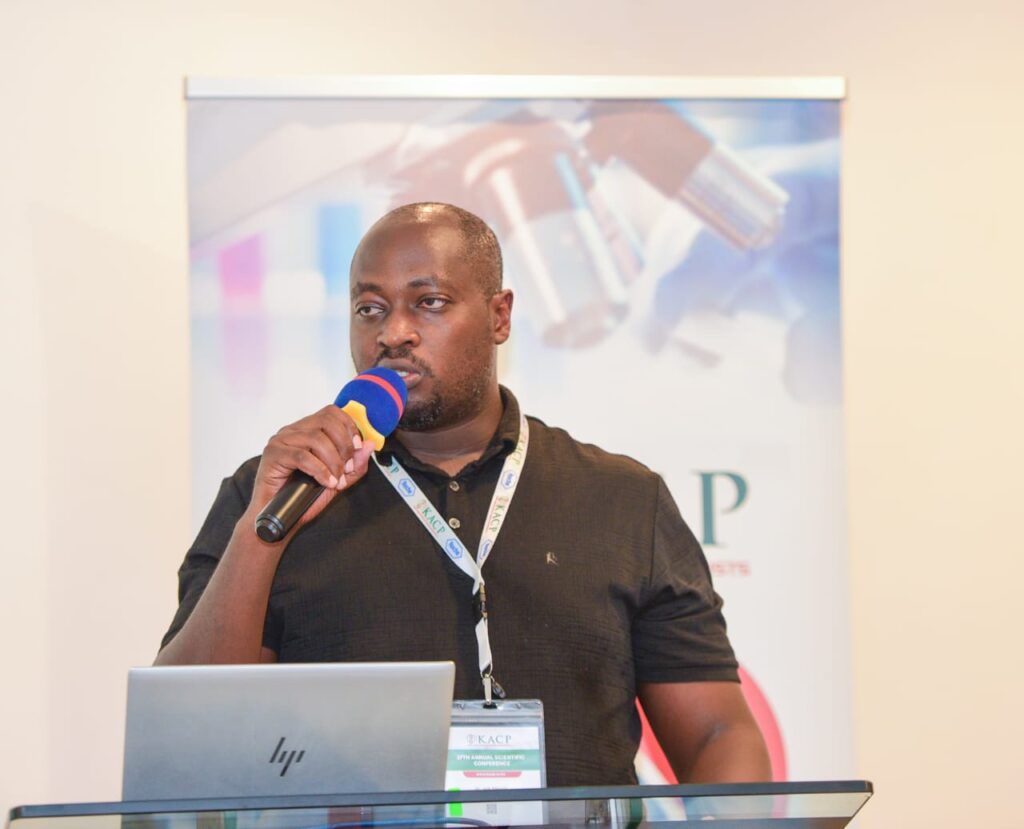
Dr. Job Mwale Magare, M.Med Gen. Path
Dr. Job Mwale Magare is a General Pathologist based at Kenyatta National Hospital. He is a graduate of the University of Nairobi with an MBChB degree and an M.Med. degree in Human Pathology. Dr. Magare has strong interest in digital pathology, teaching and healthcare management. He actively contributes to discussions on improving diagnostic quality and access across Africa.