

“By The Time Treatment Starts It’s Already Too Late”
South African Pathologist, Dr Gamalenkosi Nhlonzi, Speaks on How Chronic Specialist Shortages and Diagnostic Delays Shape Patient Outcomes
South Africa’s shortage of pathologists is often framed as a numerical problem. Less frequently examined is how that shortage shapes everyday diagnostic work and, by extension, patient outcomes.
Working across public and private healthcare systems, Dr Gamalenkosi Nhlonzi has seen how this shortage of pathologists can fundamentally change the course of disease.
In resource-constrained settings, pathology is not simply about identifying illness, but also about ensuring the diagnosis arrives in time to improve treatment outcomes. Timing matters.
Especially in the public sector, diagnostic delays are silent and deadly. Specimens take longer to reach laboratories. Reporting backlogs grow. By the time a definitive diagnosis is made, it may be too late to help the patient, and treatment options may be limited. What should have been an early intervention becomes a late confirmation.
To Dr Nhlonzi, this is one of the most difficult realities of public-sector practice: knowing what needs to happen for a patient, but working within a system that cannot always deliver it in time.
In this interview, Dr Nhlonzi takes us through South Africa’s diagnostic landscape–its successes, constraints and the potential for digital pathology and improved specialist capacity to enact change.
A Career Across Public and Private Practice
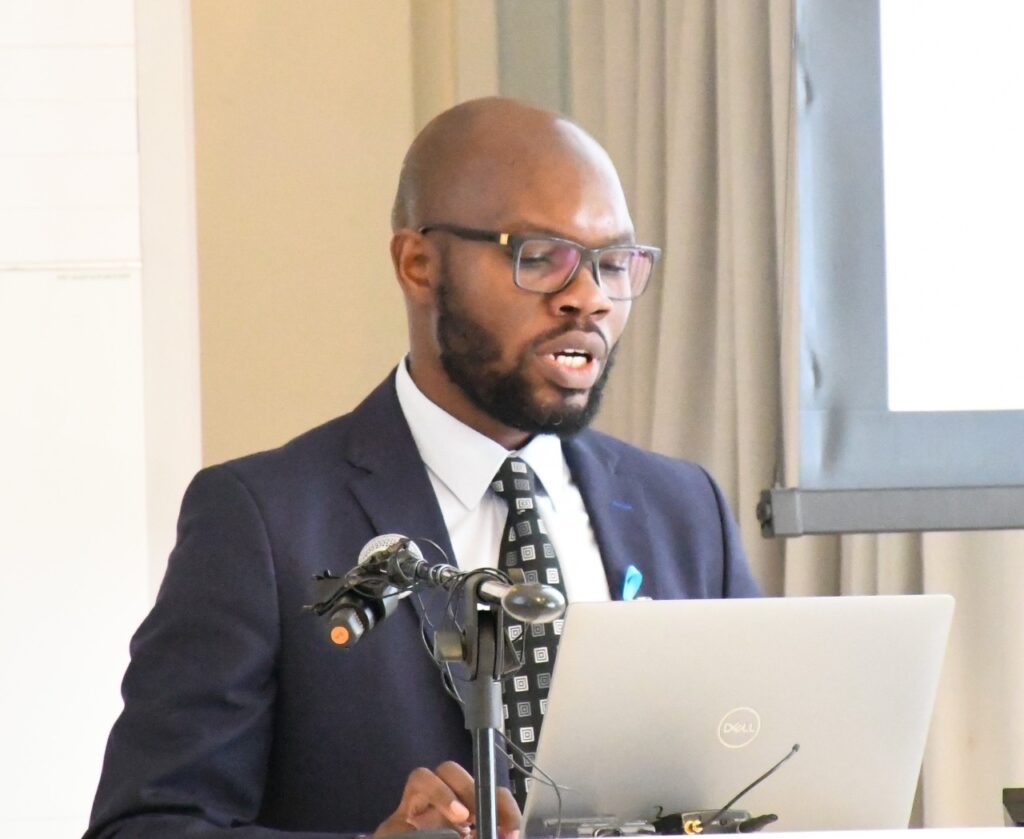
Dr Nhlonzi did not initially plan to specialise in anatomical pathology. He began in forensic pathology before discovering during clinical rotations that anatomical pathology better suited his interests. After more than a decade in the field, he says he would make the same decision again.
He has practised in both the private and public sectors and spent several years at a public university, where he worked as a lecturer and later as a departmental head. Alongside diagnostic reporting, his work included undergraduate and postgraduate teaching, research, and participation in multidisciplinary clinical meetings.
His specialist interest in placental and fetomaternal pathology developed after encountering repeated pregnancy losses without clear explanations. He undertook additional training through American and Canadian programmes after concluding that placental examination was receiving insufficient attention in local practice.
Reflecting on his specialist focus, Dr Nhlonzi points to a consistent gap in practice:
“I felt that in our setting, we’re not giving enough attention to the placenta, which forms an integral part of the developing fetus.”
Two Systems, Different Diagnostic Timelines
Having worked in both sectors, Dr Nhlonzi describes a marked contrast in how quickly diagnoses are reached.
In the private sector, he has seen patients receive biopsies promptly, with pathology results returned within predictable timeframes and treatment initiated without prolonged delay. In some cases, early diagnosis has enabled long-term surveillance and the detection of subsequent disease.
The public sector operates under different constraints. Delays can occur at multiple points in the diagnostic pathway, including specimen transport, laboratory processing, and reporting capacity. By the time a definitive diagnosis is reached, the disease may already have advanced.
The consequences of delay are often stark. “By the time it’s time for definitive treatment, the patient is already having metastatic disease.”
Capacity, Workload, and Trade-offs
The uneven distribution of pathologists compounds these delays. In KwaZulu-Natal, Dr Nhlonzi notes that private sector pathologists significantly outnumber those working in the public system, despite the public sector serving the majority of patients.
Public sector pathologists are required to balance high diagnostic volumes with teaching, research, and participation in clinical meetings. The cumulative nature of this workload, he explains, creates unavoidable trade-offs.
“Somewhere, somehow, the quality probably needs to be compromised or you have to limit what you can do,” he said.
Why the Shortage Persists
Dr Nhlonzi traces the shortage to several interrelated factors. Training posts have not expanded in line with population growth, and not all trainees complete specialist programmes.
Experienced pathologists also leave the public system through retirement or migration to health systems outside South Africa that offer better resourcing, more predictable working conditions, and clearer career progression.
Simultaneously, the technical demands of pathology have increased. Molecular testing, genetic profiling, liquid-based cytology, and digital imaging now form part of routine cancer care, significantly increasing the time required per case.
South African laboratories are technically capable of offering many of these advanced tests.
However, Dr Nhlonzi suggests that the value of advanced diagnostics is ultimately limited by access to care; “What’s the point of testing if there is no treatment available?”
Recruitment and Visibility
Dr Nhlonzi also identifies limited awareness of pathology as a contributing factor to the workforce shortage. Many medical students and early trainees, he notes, are not fully exposed to the scope or impact of the discipline during their training.
Compensation and professional visibility also influence career decisions, particularly when skilled clinicians have opportunities in private practice or in health systems abroad.
The Promise and Limits of Digital Pathology
Digital pathology and whole-slide imaging are often proposed as ways to address geographic gaps in specialist coverage. Several provinces currently have no resident pathologist, meaning samples must be transported long distances for review.
Dr Nhlonzi sees value in digital workflows that allow specimens to be processed locally and reviewed remotely by specialists in larger centres. Such approaches could reduce delays caused by transport and improve turnaround times.
However, he does not see technology as a substitute for specialist capacity. Without sufficient numbers of trained pathologists, backlogs and delays are likely to persist regardless of technological improvements.
Looking Ahead
Despite the constraints, Dr Nhlonzi describes a strong commitment among pathologists working in South Africa’s public system. He believes that meaningful improvement will require expanded training capacity, better-supported learning environments, and a gradual movement towards sub-specialisation.
His own career, shaped by work across public and private sectors and a focus on diagnostic clarity in complex cases, reflects the broader challenges facing pathology in the country.
While technology may extend reach and efficiency, addressing diagnostic delays ultimately depends on long-term investment in people, training, mentorship, and the infrastructure that allows diagnostic expertise to reach every patient who depends on a timely diagnosis.

Dr. Gamalenkosi Nhlonzi, M.Med. Anat Path
Dr. Gama Nhlonzi is an Anatomical Pathologist with 19 years of experience practising medicine. He is a graduate of the University of the Witwatersrand, Johannesburg (MBChB), Colleges of Medicine South Africa (Fc Path – Anat) and University of KwaZulu-Natal (MMed – Anat Path). He currently works with AMPATH Laboratory, as a surgical Pathologist.