

A Health-Tech Investment Opportunity
The Pathology Network is unlocking life-saving diagnostics across Africa through a comprehensive diagnostic grid
Our Vision: Democratizing Diagnostics
We are building the digital backbone of African healthcare. Our pan-African vision is to solve the twin challenges of universal access and clinical quality, not by building new infrastructure, but by orchestrating a smart diagnostic grid.
We unlock the latent potential of the existing ecosystem, bridging the gap between remote patients and world-class care to make high-quality testing efficient, affordable, and accessible everywhere.
The Model: Tech-Enabled Orchestration
We operate an asset-light diagnostic marketplace.
We do not own laboratories or employ pathologists; instead, we leverage our proprietary, AI-ready platform, Spes360, to manage the complex logistics, workflow, oversee quality and process financial transactions between independent stakeholders.
A Global Diagnostic Problem
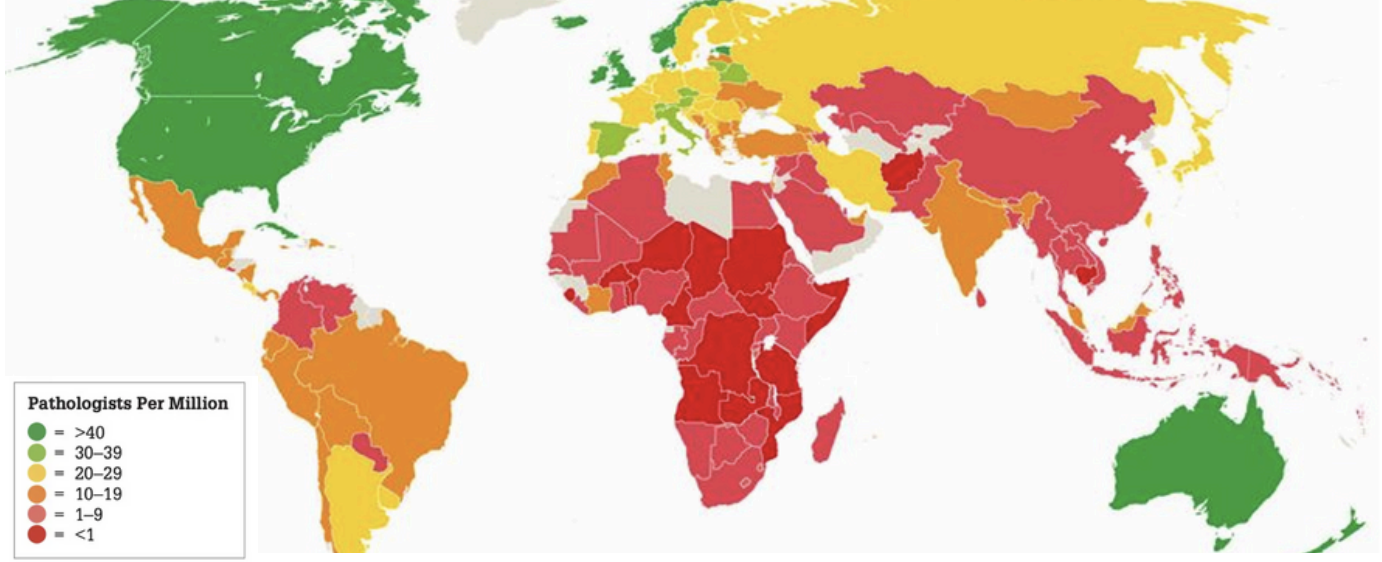
Africa is at the forefront of a catastrophic global diagnostic crisis:
Fewer than one pathologist per one million people (vs one per 25,000 in UK/US)
Inefficient use of existing labs and pathologists
Delays, preventable deaths, and costly late-stage treatments
Fragmented, low-trust systems with no central referral coordination
These fractures create systemic delays that reduce survival rates, distort healthcare spending, and limit the effectiveness of national health strategies.
How One Story Launched a Global Health Revolution

2015–2016
The concept of The Pathology Network (TPN) was conceived by Dr Joshua Kibera, a pathologist who witnessed first-hand how broken diagnostic systems cost lives.
The defining moment was born from the tragedy of Martha: a patient who experienced a delayed diagnosis, leading to a preventable death.
What began as a mission to ensure such delays never happen again has evolved into a scalable infrastructure model that connects clinicians, laboratories, and patients across entire health systems.
2017
Incorporation of The Pathology Network Ltd (Kenya) to test the concept and determine whether technology could coordinate diagnostic workflows in Kenya.
2018–2019
Early prototype ALIS runs in Dr Kibera’s private lab (later Aroha Cancer Centre). He understood that technology alone was insufficient and that governance and workflow redesign are essential.
Validation through Impact
2020 – 2024
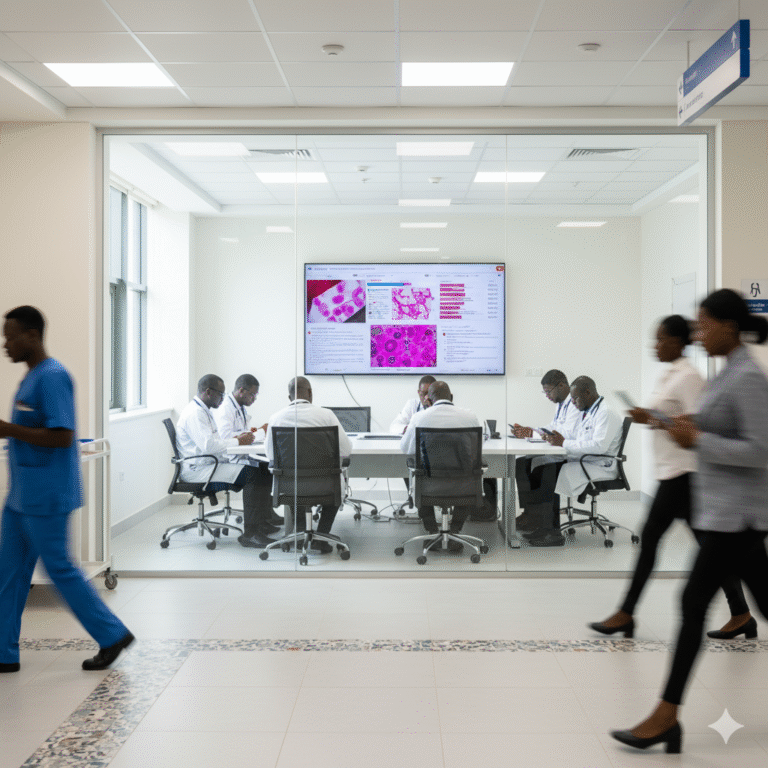
Over the next four years, TPN developed and deployed Spes360, its digital diagnostic coordination platform.
Through collaborations with hospitals, laboratories, and pharmaceutical partners, the network has demonstrated measurable improvements in turnaround time, visibility, and accountability.

From Concept to Credibility
2025
- Establishment of The Pathology Network Ltd (UK) as the global HQ and IP holder under the UK Department for Business and Trade’s Global Entrepreneur Programme.
- 40,000+ diagnostic cases processed through Spes360.
-
60+ hospitals and laboratories onboarded.
-
Strategic partnerships with local pathology bodies.
-
Turnaround time for histology reports reduced to under 48 hours.
-
National partnerships for cervical and cancer screening initiatives.
-
Formation of the TPN Medical Governance Council (TMGC) to ensure clinical and ethical standards.
Global Scale-Up
2026 onward
Launch of Spes360 Licensing Framework (Coordinator, Enterprise, Government Tech licences) enabling regional franchisees across Africa and emerging markets.
Preparation for international pilots (Oxford, Ghana, Nigeria, Rwanda) and integration of AI modules.
Market Opportunity
Africa’s in-vitro diagnostic services market is valued at $1–1.5 billion in 2025 and is projected to reach $2–2.5 billion by 2030, driven by population growth, outsourcing, and a rising health-aware middle class.
However, this represents only the surface of the opportunity.
TPN’s model integrates five historically disconnected sectors that converge around diagnostic activity.
Spes360 supports a fragmented $8.5B+ ecosystem spanning: diagnostics, medical logistics, payment processing, pharma market access, national referral systems and medical education.
Across these combined sectors, TPN’s Serviceable Market is ~$2.9B with a realistic Serviceable Obtainable Market of $113M–$327M by 2030, supported by platform economics, trusted financial settlement, and fast-growing outsourcing trends.
TPN's Addressable Market
Business Model
TPN is a multi-sided healthcare infrastructure platform that coordinates diagnostics, logistics, payments, and increasingly AI-assisted workflows.
Licensing Fees
Regional and government partners pay annual fees for deploying and maintaining Spes360 infrastructure.
Software as a Service (SaaS)
Subscriptions for hospitals, labs, and diagnostic groups using coordination and analytics modules.
AI & Data Services
Predictive analytics and AI insights for regulators, pharmaceutical partners, and ministries of health.
Revenue streams include:
Service fees
Transaction fees
SaaS licensing
Logistics coordination
Embedded payments
Future AI services
Data services and API monetisation
As volume grows, the platform unlocks additional high-margin verticals including government licensing, education, research, training, and credentialing.
Growth Drivers
The Perfect Storm for Scale
Healthcare across Africa is digitising.
From logistics to financing, it’s creating an environment ready for infrastructure-led innovation.
TPN’s growth strategy aligns with the continent’s most powerful structural trends:
Rising NCD Burden
Growing demand for early, accurate diagnosis.
Pharma Access Programmes
Require verified diagnostic readiness.
Digitisation of Logistics & Finance
Enabling faster, transparent workflows.
Public–Private Partnerships
Creating scale through shared governance.
Licensing Expansion Model
Ensures local ownership and rapid replication.
Impact & Track Record
Key Milestones
2017 - 2018
Concept developed and first MVP tested in rural Kenya.
Identified coordination and sample-referral challenges across hospitals and labs.
2019
Secured first paying customer and partner hospital.
Onboarded first external pathologist and angel investor.
2020 - 2021
Business model refined for scalability.
Received first institutional investment from Villgro Africa.
Opened initial office and hired core team.
2022 - 2023
Achieved first revenue milestone; 30 hospitals and 14 pathologists active.
Expanded operations in Nairobi and began fundraising for growth capital.
2023 - 2024
Closed US $650,000 seed round.
Released new scalable platform Spes360 and launched HPV.ke initiative.
Established UK headquarters and senior leadership team.
2025
40,000+ Patients served
300+ Clinicians connected
60+ Healthcare facilities served